Our Corner of Monmouth Parkway
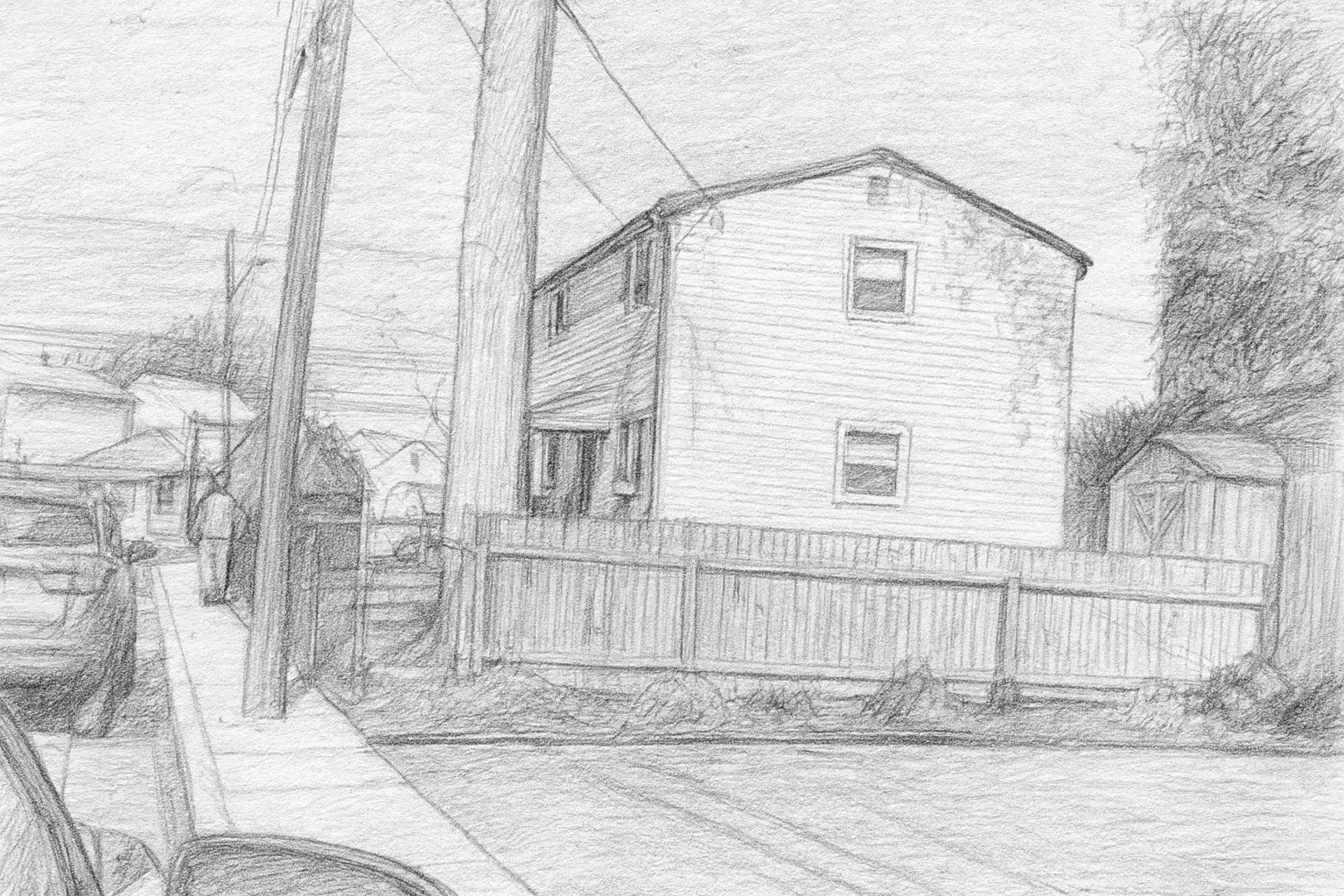
There are places in this world that stay with a person long after time has carried him far from the streets of his childhood. They linger in memory, rich with the scent of old kitchens, the hum of familiar voices, and the small, sturdy comforts that made even the poorest neighborhoods feel like kingdoms. For me, that place is East Keansburg, New Jersey, and more specifically the two-story house that stood like a faithful sentinel on the corner of Monmouth Parkway.
The house was not grand, and no one in our neighborhood would have mistaken it for much more than what it was: a simple structure, worn by salt air and Atlantic winds, the paint chipped here and there, the porch boards creaking beneath your feet. But it was home. It was the kind of home that holds stories within its walls, waiting patiently for the day someone takes the time to remember them.
The heart of that home—its warmth, its fragrance, its steady pulse—was my grandmother’s kitchen.
Long before sunrise, before the fishermen had even rolled out of their houses to make their way toward the water, the first hints of her cooking drifted through the hallway. She believed in feeding a family the way one tends to a garden: with patience, with devotion, and with the faith that food was one of God’s quiet ways of keeping a family together. There was always something simmering, baking, or cooling on the counter. Her kitchen was a sanctuary of cast-iron pots, cracked mixing bowls, and wooden spoons worn smooth by use.
The smell that still rises in my memory is a blend that words rarely do justice: onions browning in butter, the rich aroma of stew that had been cooking since dawn, fresh bread cooling on the table, and the faint sweetness of something she always had tucked away for later. Cinnamon, sugar, perhaps a touch of vanilla. Those scents drifted through the house like a gentle hymn, assuring us that whatever happened in the outside world, all was well inside these walls.
Our neighborhood in East Keansburg was poor, but no one ever told us that in words. A child does not understand poverty when there is laughter in the house, food on the table, and a family gathered close. What we lacked in money we made up for in love, stubbornness, and a sense of humor that came from understanding that if you do not laugh at life’s hardships, they find a way to laugh at you.
From the upstairs windows of our little house, you could see the rhythmic comings and goings of the block. Kids rode beat-up bikes with wheels that never quite lined up. Neighbors leaned over fences exchanging gossip or tomatoes from their gardens. Dogs barked at nothing in particular, except perhaps the passing of another day. In the evenings, the streetlights flicked on and cast long shadows across Monmouth Parkway, reminding us it was time to find our way home.
Home, when we were young, meant the living room at the end of the day. The space was cramped, and the furniture had seen better decades, but it was where we came together. In those days, television was not something you watched in every room or on every device. It was something shared, something experienced as a family. And at the center of it all was the crown jewel of our evenings: the old RCA television, that heavy, box-shaped marvel that hummed like it was working twice as hard as it should to bring the world into our living room.
The RCA sat on a wooden stand my father had reinforced with two bricks because the television weighed about as much as a Buick. When you turned it on, it warmed up slowly, the picture fading in as if waking from a long nap. The screen flickered, adjusted, and finally settled into place with a reliability we trusted completely, even when the antenna needed to be adjusted by someone brave enough to give it a twist.
My brothers, my sister, and I crowded around that TV each night, elbows touching, legs stretched across the braided rug my grandmother had made. We learned patience sitting in front of that screen because nothing happened instantly. It took time for the sound to line up just right, time for the picture to sharpen, and time for all of us to find a comfortable seat on the floor. But once it was ready, the RCA gave us the world: game shows, sitcoms, variety hours, and the kind of programs that made us forget, if only for thirty minutes, that the real world was sometimes difficult.
Grandma would shuffle in from the kitchen, wiping her hands on her apron, and sit in her favorite chair. She always smelled faintly of flour and whatever spices she had used that day. Her presence calmed the room. Even the most unruly of us settled down when she gave one of her “now listen here” looks, though it was never unkind. She watched our little rituals with contentment, knowing that one day these evenings would become the memories we cherished.
We were not a quiet family, and television did not change that. We talked through the programs, laughed at all the wrong moments, argued about who got the better seat, and occasionally my father would tell us to “hush up” or “move over,” though he was smiling while he said it. There was something sacred about those evenings. No matter how tight the bills became, no matter what troubles crept in from the outside world, no matter how hard the wind rattled the windows, the sight of my brothers and sister gathered in front of the RCA made it all feel manageable.
There were nights when the ocean winds blew so fiercely that the house groaned as if it were an old man stretching his bones. The trees bent, the power flickered, and we held our breath hoping the TV would keep going. Sometimes it did. Sometimes it didn’t. When the lights went out, the darkness swallowed the room so completely you could almost hear everyone thinking the same thing: What now?
But even that held its own kind of magic. My grandmother would light a candle, my father would grab the old flashlight from the junk drawer, and the family would gather closer together, telling stories until the power returned. The house felt smaller on those nights, but in a comforting way, as if we were tucked safely under the wings of something greater than all of us.
Life in East Keansburg was not glamorous. Sometimes the paint peeled from the siding, and sometimes the winter winds stung our faces as we walked home from school. The streets were narrow, the houses close together, and the paycheck always seemed one step behind the month. Yet there was beauty in those days. There was honesty. There was the kind of closeness that cannot be bought, only lived.
The mornings began with the sound of my grandmother’s cooking, the smell drifting up the stairs like a gentle reminder that we belonged somewhere. Afternoons were filled with the noisy scramble of children running up and down Monmouth Parkway, our sneakers slapping the pavement. Evenings were spent in the glow of the RCA, sharing stories, laughter, and the simple contentment of being together.
I learned things in that house that no textbook could ever teach. I learned that love does not require wealth, only devotion. I learned that a home is not measured in square footage but in the warmth of the people inside it. I learned that families are like stew—held together by different ingredients, each one essential to the flavor. And I learned that small beginnings do not limit the size of one’s dreams.
There were days when I would sit on the front steps and look out across the block, wondering what lay beyond our little corner of the world. Sometimes life felt predictable, even confining, but now, in hindsight, I realize that those days formed me in ways I did not recognize at the time. They gave me resilience. They gave me gratitude. They gave me a story worth remembering.
We moved on eventually, as children do, setting out to find our place in the world. But no matter where life has taken me, the memory of that two-story house on the corner of Monmouth Parkway comes back like a warm breeze off the bay. I can still picture the kitchen light glowing in the early morning. I can still hear my grandmother humming as she stirred a pot on the stove. I can still see my siblings gathered around the old RCA, their faces lit by the flickering screen as the world unfolded before us.
Sometimes the smallest houses hold the biggest stories. Ours certainly did. And in those stories I find myself again—older now, wiser perhaps, but still that child who inhaled the scent of grandma’s cooking and felt that all was well.
In the end, East Keansburg taught me something simple and profound:
You do not need wealth to be rich.
You do not need luxury to feel blessed.
And you do not need a palace when you have a home filled with love.
Those memories remain, preserved like treasured heirlooms in the warm attic of the heart. And when life becomes complicated, when the world grows loud and unsteady, I return to that house in my mind, to its creaking floors, its crowded living room, its steady heartbeat. I return to Monmouth Parkway.
And I remember who I am.